
Loveboat, Taipei and the Power in Reclaiming Stereotypes

Processed with VSCO with c1 preset

Disclaimer: I am Black. I do not understand what it is like to be Asian, nor will I pretend to. But as a Black woman, I understand the power of racist stereotypes and I believe that I can add valuable commentary to they way that characters in Loveboat, Taipei navigated anti-Asian stereotypes. I will do my absolute best to treat this topic with the care that it deserves. For ways to support the Asian community, please visit https://stopasianhate.carrd.co/

Loveboat, Taipei by Abigail Hing Wen follows the story of rising college freshman Ever Wong, the daughter of Chinese-American immigrants. Ever’s parents decide to send her to Taiwan for the summer to attend a program created to give young Asian-Americans the opportunity to learn more about Chinese culture. The program, which is intended to be a purely educational experience, ends up being a summer camp like experience where alcohol, romance, and drama are abound.

In the book, there is a very persistent theme of the existence of anti-Asian stereotypes and how they affect the characters. Some brush it off their shoulders, others go out of their way to disprove them, and many feel burdened by them. But there is a very significant journey that a group of characters go on that holds an important lesson in the power of reclaiming stereotypes. Marc, David, Sam, Benji, and Peter are all men and are all members of the program along with Ever. In the first few days of the program, Ever notices that the group of guys have conversations about masculinity and the way Asian men are stereotyped. They pick apart and analyze the physical appearance of Asian men in the program who they view as masculine. They also put on a show of strength to prove that they don’t fit into the effeminate label Asian men are stereotyped with.

With this, Hing Wen shows a common way a lot of people of color respond to racist stereotypes. Marc, David, Sam, Benji, and Peter feel as if they have something to prove and go out of their way to show they are not what they are stereotyped as. The problem with responding to racist stereotypes in this way is that it is never enough. If the globally Eurocentric world we live in determines that you are dumb, there are not enough books you can read in the world that would change its mind. If racist standards of masculinity determines you to be effeminate, there are not enough weights in all the gyms on Earth you can lift to prove them wrong. If a world that demands that people of color are to be seen and not heard determines that you are too loud, no amount of unsaid, tucked-away words will disprove that myth. Another problem with this method of responding to stereotypes is that it can take a toll on a person’s health. In an article for The American Psychological Association, psychologist Wizdom Powell, PhD, says that “Masculinity — the idea that men should be self-reliant, tough and aggressive — can prompt unhealthy behavioral patterns in all men” and when applied to men of color, it leads to “poorer health outcomes.”

When Loveboat, Taipei ends with a talent show performance where Marc, David, Sam, Benji, and Peter put on a drag show, this shows, as Ever says, that they’ve decided to take back stereotypes on their own terms. They let go of the pressure to prove stereotypes about them wrong and decide to do something that is enjoyable for them, Western masculinity standards be dammed. The choice that they made, to stop trying to disprove stereotypes and instead reclaim them, is not only freeing and much emotionally and psychologically healthier, it may end up saving their lives. Each time a person swallows their tongue, or unnecessarily pressures themselves to be better than their peers, or hides a piece of who they are in an effort to defy stereotypes, it chips away at a piece of who they are. It is death by a thousand cuts. The fact that these characters went on this journey will help show a generation of Asian readers that it’s okay to not fit into the standards that a white society sets for them and to explore what it means to be a man on their own terms. Hing Wen’s story shows the importance of standing in one’s truth and how reclaiming stereotypes can liberate you.

Problematic or Outdated? How the Twilight Series Holds Up 15 Years Later.

It’s hard to overstate the wild frenzy surrounding the Twilight series when the books and the movies first came out. Twilight marked a special era in pop culture where vampires and teen heartthrobs reigned supreme and film studios spent hundreds of millions of dollars adapting YA novels, trying to replicate the magic and the money that Twilight produced. But not all art stands the test of time. While Twilight captivated the hearts and minds of millions of people across the world, it’s important to analyze it through a modern lens in order to understand and decide the place it has in history and pop culture.

Hollywood is an industry with a glaring lack of diversity and white writers and creators made it very clear through their work that they live in and dream of worlds where people of color are either invisible, the villain, or relegated to the background.

In 2005, the first Twilight book hit the shelves, almost instantly becoming a cult classic. Summit Entertainment soon acquired the rights to adapt the books and the rest was history. For the first Twilight film, Catherine Hardwicke was chosen to direct. In an interview with the Daily Beast, Hardwicke opened up about her experience working with Meyer and how she found it difficult to diversify the casting choices. “And I was like oh my God, I want the vampires, I want them all—Alice, I wanted her to be Japanese! I had all these ideas. And she just could not accept the Cullens to be more diverse,” However, Meyer was perfectly okay with Laurent, a villain in the series, being played by a Black actor and later became open to secondary characters being played by people of color. Unfortunately, this was common in films and TV shows that were made pre-2014. Hollywood is an industry with a glaring lack of diversity and white writers and creators made it very clear through their work that they live in and dream of worlds where people of color are either invisible, the villain, or relegated to the background.

Along with a lack of diversity in the films, the story itself had issues that generally went unaddressed at the height of the series’ popularity. Edward, the love interest of protagonist Bella, exhibited behaviors that would be described as creepy, abusive, and obsessive had it been set in the real world. Edward took it upon himself to camp out in Bella’s room without her knowledge for multiple nights and watch her sleep to “protect” her, despite the fact that at the time, Bella faced no threats any other person living in their small town of Forks, Washington would not have faced. Edward also decides to start following Bella, again, without her consent whenever she is at school, out with friends, or at home with her father. With Edward being positioned by Meyer as an endearing and protective heartthrob, Bella of course finds this charming and doesn’t see any issue with it.

It’s also important to point out that this is textbook abusive behavior that is only ever viewed as acceptable in fictional worlds where readers who are witnessing it do not have to deal with the consequences of the abusive behavior.

There are also the problems that come up later on in the series with Bella’s friendship with Jacob Black, a member of a nearby werewolf pack. Because of Bella’s social awkwardness and unique situation dating a vampire, she finds herself with a very small amount of friends and only one that could possibly relate to her: Jacob. Edward, because of his thinly veiled jealousy, attempts to isolate Bella from Jacob by telling her that werewolves are too dangerous for her to be around, going out of his way to antagonize Jacob, and even going to lengths to ruin Bella’s car engine so she can’t go visit him. There are many reasons why this line of thinking is wrong, including the fact that unlike Edward, a member of Jacob’s family has never tried to kill Bella. It’s also important to point out that this is textbook abusive behavior that is only ever viewed as acceptable in fictional worlds where readers who are witnessing it do not have to deal with the consequences of the abusive behavior.

Lastly, we land on our protagonist Bella Swan. Bella’s actions throughout the series can be characterized as naïve, reckless, and a little oblivious. During their courtship in the first book, Bella figures out that Edward is a vampire. She goes to meet with Edward and lies to her loved ones about where she’s at, so in case Edward kills her out of bloodlust, they won’t be able to find her or possibly suspect him. Bella positions Edward as the axis in which everything in her world revolves around. So much so, that when Edward breaks up with her and leaves the country in the second book, she loses interest in every aspect of her life from friends to family to school. In the haze of her heartbreak, she puts herself in dangerous, sometimes life-threatening situations so that she can trigger recurring hallucinations of Edward. After Edward returns and they get back together, Bella decides that at 17, before she’s even been able to experience life, she wants to become immortal. That would mean that not only would she never really be able to see her parents or any of her friends again, she would also have to live through all of them dying with Edward and his family as her only companions for the rest of her immortal life.

It is of course not up to me whether or not the Twilight series will be remembered as outdated or problematic. However, the story that Meyer wrote does attempt to normalize behavior that is at best, creepy and dangerous and at worst, abusive, with the victim of the abuse condoning it. Regardless, Twilight is an important and massive part of pop culture and it is important to analyze the art that we consume and decide what place it should have in history.

The Journey Begins

“All the stories are true.” — City of Bones, Cassandra Clare

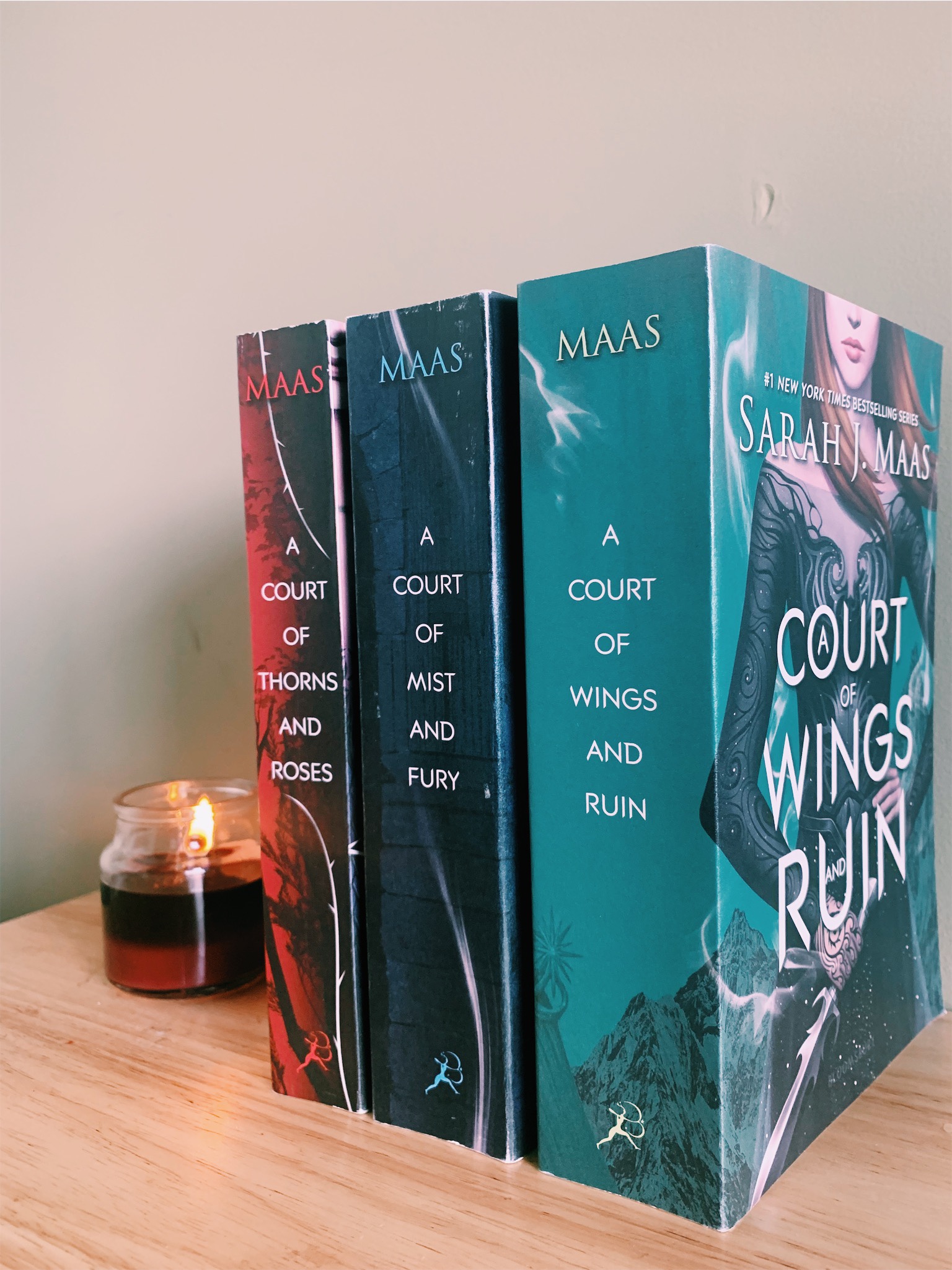
All the stories are true. Reading Cassandra Clare’s foreword in City of Bones really stuck with me. She talked about how when Jace said that to Clary, he meant not only were vampires and faeries and monsters real, but the stories in our hearts are too. Where we are the heroes and there will always be good people to defeat the evil. She wrote perfectly how books make me feel. I’ve never belonged in many places, but I could always find my home between the pages of a book. When problems arise with my family, Hogwarts is always there to welcome me home. When I feel like I’m stuck in life and things will never change, Feyre’s story reminds me that the impossible can happen. Reading has saved my life. It makes me feel alive and shows me that I will always be capable of facing my demons, being a good friend, and surviving whatever is thrown at me. I hope that this blog will be a safe haven for people who feel the way that I do: people who are different, and find the strength to survive in the stories that we read.