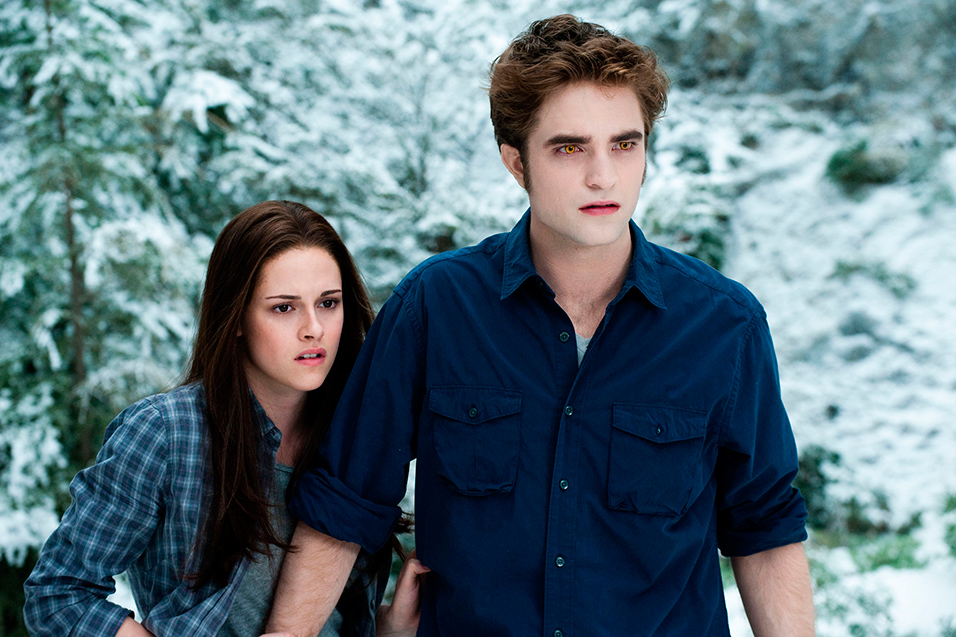
It’s hard to overstate the wild frenzy surrounding the Twilight series when the books and the movies first came out. Twilight marked a special era in pop culture where vampires and teen heartthrobs reigned supreme and film studios spent hundreds of millions of dollars adapting YA novels, trying to replicate the magic and the money that Twilight produced. But not all art stands the test of time. While Twilight captivated the hearts and minds of millions of people across the world, it’s important to analyze it through a modern lens in order to understand and decide the place it has in history and pop culture.
Hollywood is an industry with a glaring lack of diversity and white writers and creators made it very clear through their work that they live in and dream of worlds where people of color are either invisible, the villain, or relegated to the background.
In 2005, the first Twilight book hit the shelves, almost instantly becoming a cult classic. Summit Entertainment soon acquired the rights to adapt the books and the rest was history. For the first Twilight film, Catherine Hardwicke was chosen to direct. In an interview with the Daily Beast, Hardwicke opened up about her experience working with Meyer and how she found it difficult to diversify the casting choices. “And I was like oh my God, I want the vampires, I want them all—Alice, I wanted her to be Japanese! I had all these ideas. And she just could not accept the Cullens to be more diverse,” However, Meyer was perfectly okay with Laurent, a villain in the series, being played by a Black actor and later became open to secondary characters being played by people of color. Unfortunately, this was common in films and TV shows that were made pre-2014. Hollywood is an industry with a glaring lack of diversity and white writers and creators made it very clear through their work that they live in and dream of worlds where people of color are either invisible, the villain, or relegated to the background.
Along with a lack of diversity in the films, the story itself had issues that generally went unaddressed at the height of the series’ popularity. Edward, the love interest of protagonist Bella, exhibited behaviors that would be described as creepy, abusive, and obsessive had it been set in the real world. Edward took it upon himself to camp out in Bella’s room without her knowledge for multiple nights and watch her sleep to “protect” her, despite the fact that at the time, Bella faced no threats any other person living in their small town of Forks, Washington would not have faced. Edward also decides to start following Bella, again, without her consent whenever she is at school, out with friends, or at home with her father. With Edward being positioned by Meyer as an endearing and protective heartthrob, Bella of course finds this charming and doesn’t see any issue with it.
It’s also important to point out that this is textbook abusive behavior that is only ever viewed as acceptable in fictional worlds where readers who are witnessing it do not have to deal with the consequences of the abusive behavior.
There are also the problems that come up later on in the series with Bella’s friendship with Jacob Black, a member of a nearby werewolf pack. Because of Bella’s social awkwardness and unique situation dating a vampire, she finds herself with a very small amount of friends and only one that could possibly relate to her: Jacob. Edward, because of his thinly veiled jealousy, attempts to isolate Bella from Jacob by telling her that werewolves are too dangerous for her to be around, going out of his way to antagonize Jacob, and even going to lengths to ruin Bella’s car engine so she can’t go visit him. There are many reasons why this line of thinking is wrong, including the fact that unlike Edward, a member of Jacob’s family has never tried to kill Bella. It’s also important to point out that this is textbook abusive behavior that is only ever viewed as acceptable in fictional worlds where readers who are witnessing it do not have to deal with the consequences of the abusive behavior.
Lastly, we land on our protagonist Bella Swan. Bella’s actions throughout the series can be characterized as naïve, reckless, and a little oblivious. During their courtship in the first book, Bella figures out that Edward is a vampire. She goes to meet with Edward and lies to her loved ones about where she’s at, so in case Edward kills her out of bloodlust, they won’t be able to find her or possibly suspect him. Bella positions Edward as the axis in which everything in her world revolves around. So much so, that when Edward breaks up with her and leaves the country in the second book, she loses interest in every aspect of her life from friends to family to school. In the haze of her heartbreak, she puts herself in dangerous, sometimes life-threatening situations so that she can trigger recurring hallucinations of Edward. After Edward returns and they get back together, Bella decides that at 17, before she’s even been able to experience life, she wants to become immortal. That would mean that not only would she never really be able to see her parents or any of her friends again, she would also have to live through all of them dying with Edward and his family as her only companions for the rest of her immortal life.
It is of course not up to me whether or not the Twilight series will be remembered as outdated or problematic. However, the story that Meyer wrote does attempt to normalize behavior that is at best, creepy and dangerous and at worst, abusive, with the victim of the abuse condoning it. Regardless, Twilight is an important and massive part of pop culture and it is important to analyze the art that we consume and decide what place it should have in history.
 Starry Book Sky